
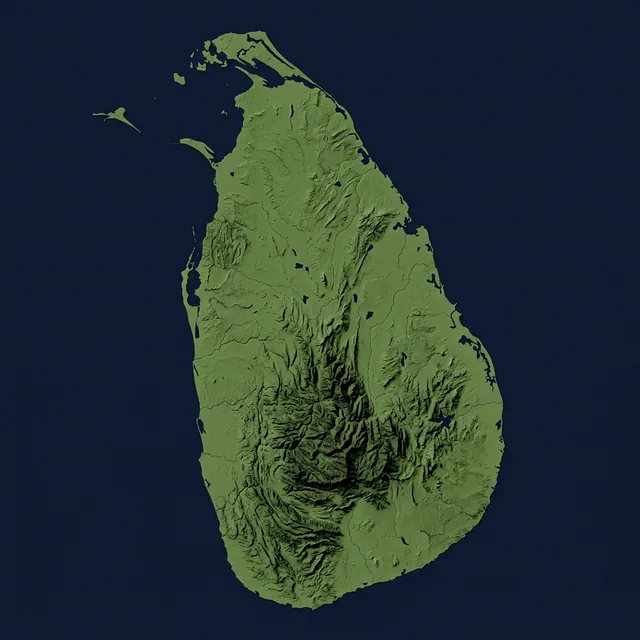
About Udawalawe
A massive national park created as a sanctuary for wild animals displaced by the construction of the Udawalawe Reservoir. It is arguably the best place in Sri Lanka to see wild elephants year-round.
History & context
Udawalawe was established as a national park on 30 June 1972 to protect wildlife displaced by the construction of the Udawalawe Reservoir on the Walawe River. Udawalawe is widely regarded as one of Sri Lanka's most reliable parks for seeing wild elephants. The Elephant Transit Home rehabilitates orphaned calves for eventual release back into the wild.
Climate & best time
Hot, dry-zone climate with temperatures between 24°C and 32°C year-round. Inter-monsoonal rains arrive October to December. Unlike Yala, Udawalawe stays open all year and offers reliable elephant sightings in every season.
Udawalawe is one of Sri Lanka's most reliable places to see wild elephants, especially on early-morning and late-afternoon safaris.
Lush greenery and excellent bird watching.
Top experiences
Top Attractions2
Journeys that feature Udawalawe
Worth the detour1
Hidden spots a short drive away, easy to add as a side trip from here.
 33 km away
Combine with
Good to know14
- Udawalawe National Park is one of the best places in Sri Lanka to see wild elephants in their natural habitat
- Early morning and late afternoon safaris usually provide the best wildlife sightings before the heat becomes stronger
- Wildlife sightings are never guaranteed, patience and quiet observation are part of the safari experience
- Wear light, neutral-colored clothing such as green, brown, or beige for safari trips
- Safari jeeps are mostly open vehicles, so sunscreen, sunglasses, and a hat are highly recommended
- Roads inside the park can become dusty and bumpy, especially during dry months
- Carry a light jacket for early morning safaris, as temperatures can feel cooler before sunrise
- Standing up or making loud noises inside safari vehicles is usually not allowed near animals
- Do not feed wildlife or attempt to get too close to animals for photographs
- Mobile signal may be weak in some areas inside the national park
- Dust can become heavy during long dry-season safaris, so some travelers prefer carrying a scarf or mask
- Birdwatching is also popular in Udawalawe, with many species commonly seen around lakes and grasslands
- Sudden rain showers can make safari tracks muddy during wetter months
- Fresh king coconut and local Sri Lankan meals are popular stops after safari experiences in the area
Common questions5
Yes. Udawalawe is one of Sri Lanka's best national parks for wildlife safaris and is especially famous for seeing wild elephants throughout the year.
Udawalawe is best known for elephants, but visitors may also see crocodiles, buffalo, deer, monkeys, many bird species, and other wildlife.
Early morning and late afternoon are the best times for an Udawalawe safari, when wildlife is usually more active and temperatures are cooler.
Udawalawe is best known for reliable elephant sightings, while Yala is famous for leopard encounters. Both parks offer different safari experiences.
Most Udawalawe safaris take around 3 to 4 hours, which is usually enough time to explore the park and enjoy wildlife sightings.